Salience Labs just raised $125 million to run AI on light
Salience Labs just raised $125 million to run AI on light. Three years ago, nobody could picture the chip.
On 14 October 2026, Salience Labs announced a $125 million Series B. Bullhound Capital led the round, and Intel Capital and AMD Ventures joined it. The company builds optical circuit switches: chips that route data inside AI data centres as light.
In 2023 we built Salience’s brand and investor story. The raise belongs to Salience. Here is what we learned about making a technology this hard to see easy to believe.
Investors can’t fund what they can’t picture.
A deep tech deck usually loses the room on slide three. Founders explain the physics. Investors are waiting for the consequence.
Salience had the hardest version of that problem. The product is smaller than most things in the room, and its value is invisible: data that no longer slows down on its way between processors. Nobody can see a photon change direction.
So the brief was not “make it look futuristic”. It was: make an investor understand, in one look, why light changes the economics of AI.
We started with one sentence, not a logo.
Before any design, we agreed on the idea: light should not decorate the brand, it should do the work. We did not illustrate photonics. We translated its principles, refraction, transfer and direction, into a visual language.
“We wanted to translate the principles of photonics rather than illustrate it literally.”
Ihor Hulyahrodskyy, founder of ochi.design

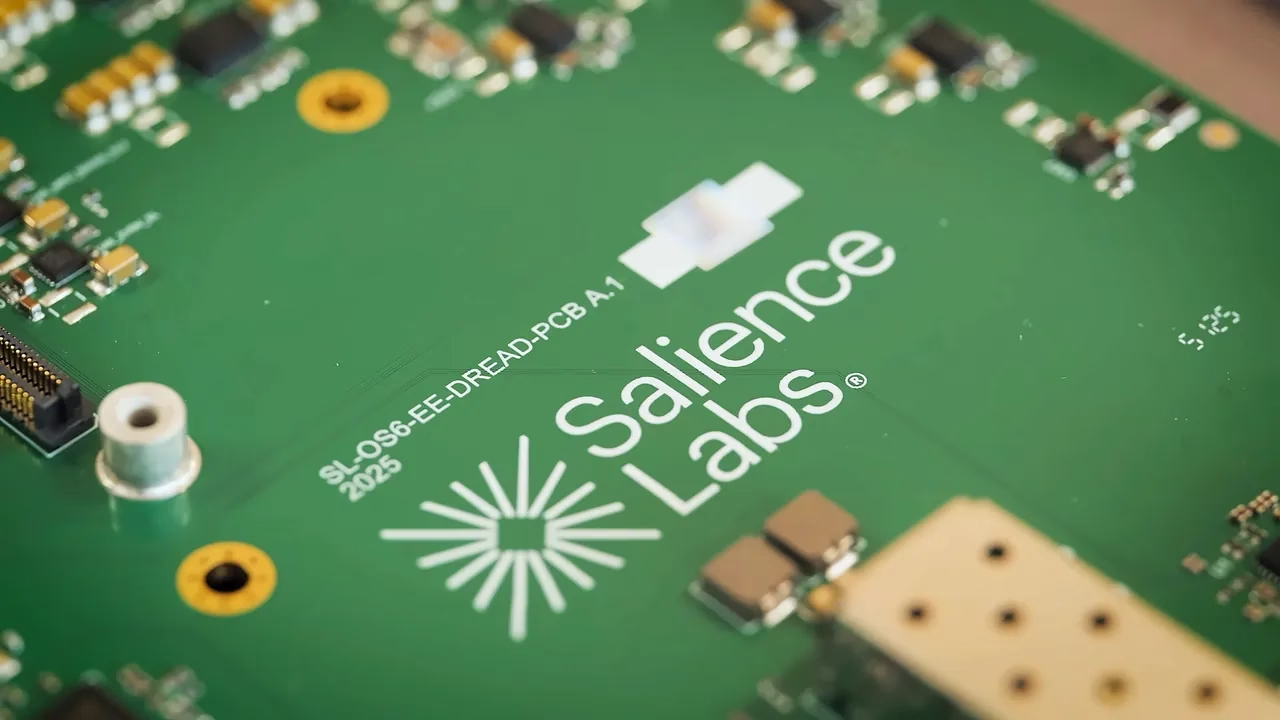
The mark draws the chip with light. It shows the product in action rather than describing it. Every other element follows the same rule: gradients and luminous fields behave the way light moves through material. The logic stays fixed. The surface is allowed to move.
The deck explains in layers.
A technical audience and a financial audience read the same deck in different ways. We built it to work on three levels:
1. Three seconds. Each headline says the whole slide in words. Read only the headlines and you get the full argument.
2. Thirty seconds. A diagram per slide, each with one job.
3. Three minutes. Technical depth for the partner who forwards the deck to an engineer.
The order did the persuading: the limits of electronic networking first, then photonics as a credible alternative, then the market that opens once the bottleneck is gone. No slide existed to look impressive. Each one moved the story forward.
Show the product, even when it’s tiny.
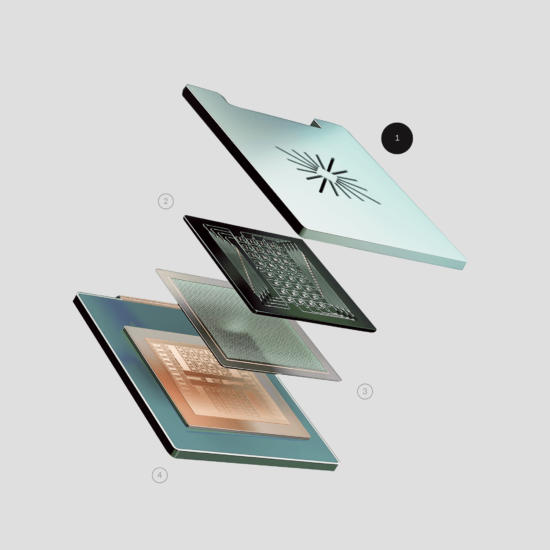
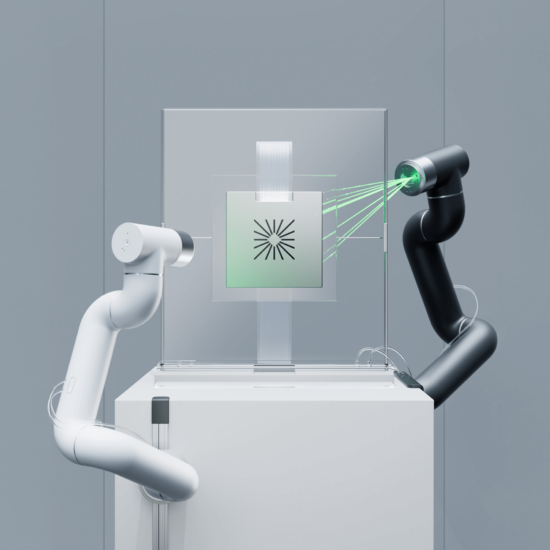
For the website designed by our partners obys, we built detailed 3D models of the product. Visitors can rotate them 360 degrees and pull them apart layer by layer to see what each component does. The same models went into the deck and the brand. An investor, an engineer, and a future hire now see the same object, explained at their own level.
From $30 million to $125 million.
A $30 million round followed the new identity. This October came the $125 million Series B, led by Bullhound Capital with Intel Capital and AMD Ventures. Salience will use it to scale manufacturing and expand in Silicon Valley.
A round like that is won by the technology, the team and years of work. A brand itself doesn’t raise money. What it can do is remove the friction between a great company and the people deciding whether to back it.
Five rules for founders building something hard to explain:
1. Lead with the consequence, not the mechanism. “AI clusters stop waiting for data” before “silicon photonics”.
2. Find the one sentence an investor will repeat to their partners. If they can’t retell it, they can’t champion it.
3. Design in layers. Three seconds, thirty seconds, three minutes.
4. Give the invisible one recurring image. When the motif returns from slide to slide, the deck rhymes and the idea sticks.
5. Build the brand and the deck from the same idea. The website, the deck and the product should tell one story, not three.
Recognised with a Red Dot.
The Salience identity by ochi.design received Red Dot: Best of the Best in Brands & Communication Design 2026. See the full article here.
Red Dot is one of the best-known international design competitions. Brands & Communication Design is the part of it that looks at brand identities, campaigns and communication work.
Raising a round for something hard to explain?
We help deep tech founders turn complex technology into a story investors believe. Book a free 30-minute intro call with our founder. Let’s talk about your raise.
FAQ
How long does a brand and investor deck take?
Typically 6 to 10 weeks. A pitch deck alone takes 3 to 5 weeks.
How much does a pitch deck cost?
A story-led investor deck typically costs $25,000 to $50,000, depending on scope.
Latest publications:
4 years as trawa’s design partner: 3 rounds, €36M+ raised
By Ihor Hulyahrodskyy
17 Nov. 26
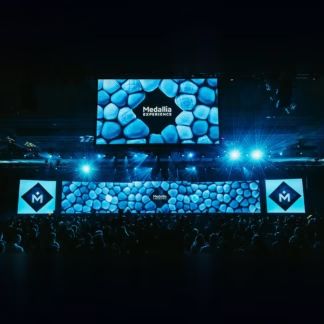
Step behind the stage at Medallia Experience: how ochi.design prepares the presentations for a premier company conference
By Kseniia Palamarchuk
14 Nov. 26